Elijah as Forerunner
Under the Banner of HeavenElijah as Forerunner is the religious role Dan Lafferty claims for himself after concluding that neither mainstream religion nor Mormon fundamentalism provides the answers he sought. He understands the biblical Elijah as the herald of Christ’s return and believes that he, like Elijah, has been assigned to prepare the way. This conviction gives his account of prophecy, violence, and his brother Ron Lafferty’s actions a single apocalyptic framework, though the book presents it as Dan’s personal interpretation rather than an established communal doctrine.
From fundamentalism to a prophetic identity
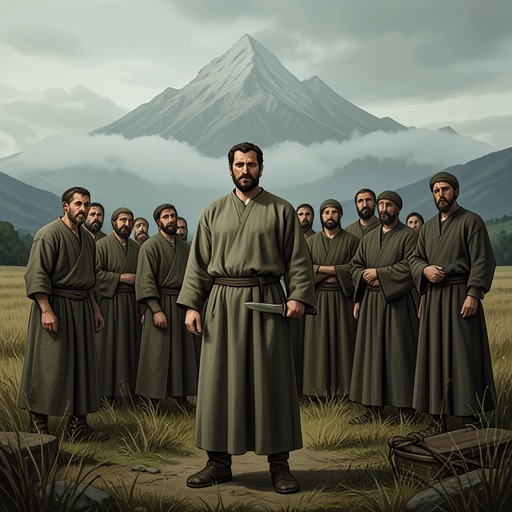
Dan’s belief develops after a period in which he argues that organized religion leads people back toward fundamentalism, only for fundamentalism itself to reveal further contradictions. He says that his time at a monastery was when his ideas began to come together. At the center of the resulting faith is his certainty that he is Elijah, the biblical prophet who serves as a forerunner. He compares his task to John the Baptist’s preparation for Christ’s first coming: Dan believes that he is to prepare for the return of Jesus Christ.
The role rests on a fixed division between people Dan considers children of God and people he considers children of the devil. He treats the distinction as inborn and unchangeable, and associates love exclusively with God’s children. This worldview turns his prophetic office into more than a prediction about the future: he believes he must identify the righteous and disclose who their divine Father is before the final separation of humanity.
The sign and the promised return
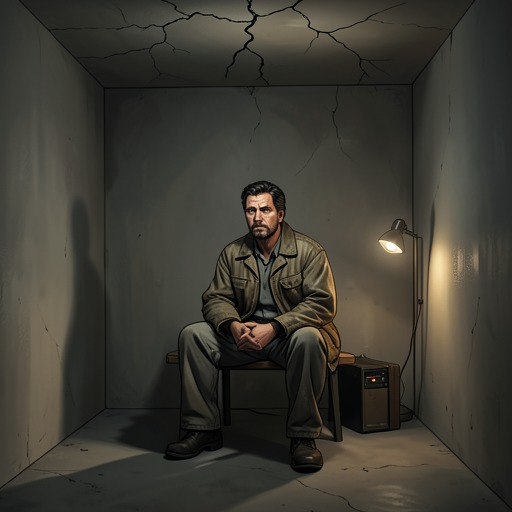
A year or two after his incarceration, Dan says, he was pacing in his cell in the middle of the day when he heard a voice instruct him to write down that the moon would shine from noon until nine. He recalls that the experience differed from revelations he had associated with the School of the Prophets, and that he did not understand its meaning at first. Only later did he conclude that the unusual daylight moon would be the sign of Christ’s return. He does not claim to know how such a sign would occur, but believes it would be unmistakable.
Dan connects this sign to a larger timetable. He believes that the devil’s period of dominion over the world, which he reckons as six thousand years, is nearing its end, after which Christ’s return will begin the thousand-year reign of the Kingdom of God. In Dan’s account, his own role is indispensable: he expects to recognize Christ and announce the return, and believes that Christ cannot come until Elijah fulfills his calling.
Violence reinterpreted as prophecy
Dan uses this prophetic framework to reinterpret the murders of Brenda Lafferty and Erica Lafferty. He presents them as a foreshadowing of the prophesied harvest, when Christ’s angels separate those who do not belong to his kingdom. He further interprets the angels not as winged beings descending from heaven but as people on earth acting in what they believe is their Father’s service. The account thereby joins his claim to Elijah’s role with a retrospective religious explanation of the killings; it does not make that explanation an objective account of their cause.
The same framework reshapes Dan’s understanding of Ron’s attempt to strangle him in 1984. Dan speculates that the devil had revealed his identity and assignment to Ron before God revealed them to Dan, and that Ron’s attack was meant to prevent him from announcing Christ’s return. He also reinterprets Ron’s periods of seeming mental absence during their 1984 trip across the West as possible moments when Ron was listening to voices. These are Dan’s suspicions, not facts independently established by the book.
Authority, separation, and the brothers’ conflict
The book sets Dan’s later personal revelations against a broader religious culture in which authority and the right to receive revelation are tightly controlled. It describes a patriarchal hierarchy in which men hold priesthood authority and prophets alone receive revelations governing believers’ lives; questioning religious leaders is treated as subversive. In Colorado City, Arizona, the restrictions also reach information and personal relationships: residents are forbidden to watch television or read newspapers, and contact with people outside the community, including former members, is prohibited. The book’s account of this environment helps distinguish the authority claimed by recognized leaders from Dan’s later, individual prophetic certainty.
Dan’s interpretation of Ron turns their conflict into a struggle between opposed spiritual assignments. He remains convinced that Ron is still hearing instructions to kill him and reads prison rumors that Ron is exercising like a boxer as evidence that Ron may be preparing for another opportunity. The book presents this as Dan’s continuing belief, not confirmation that Ron intends to attack him. Elijah as Forerunner thus becomes the organizing key to Dan’s later explanations: it links an alleged revelation, a predicted sign, the prospect of Christ’s return, and a family conflict that he understands as part of a cosmic contest.